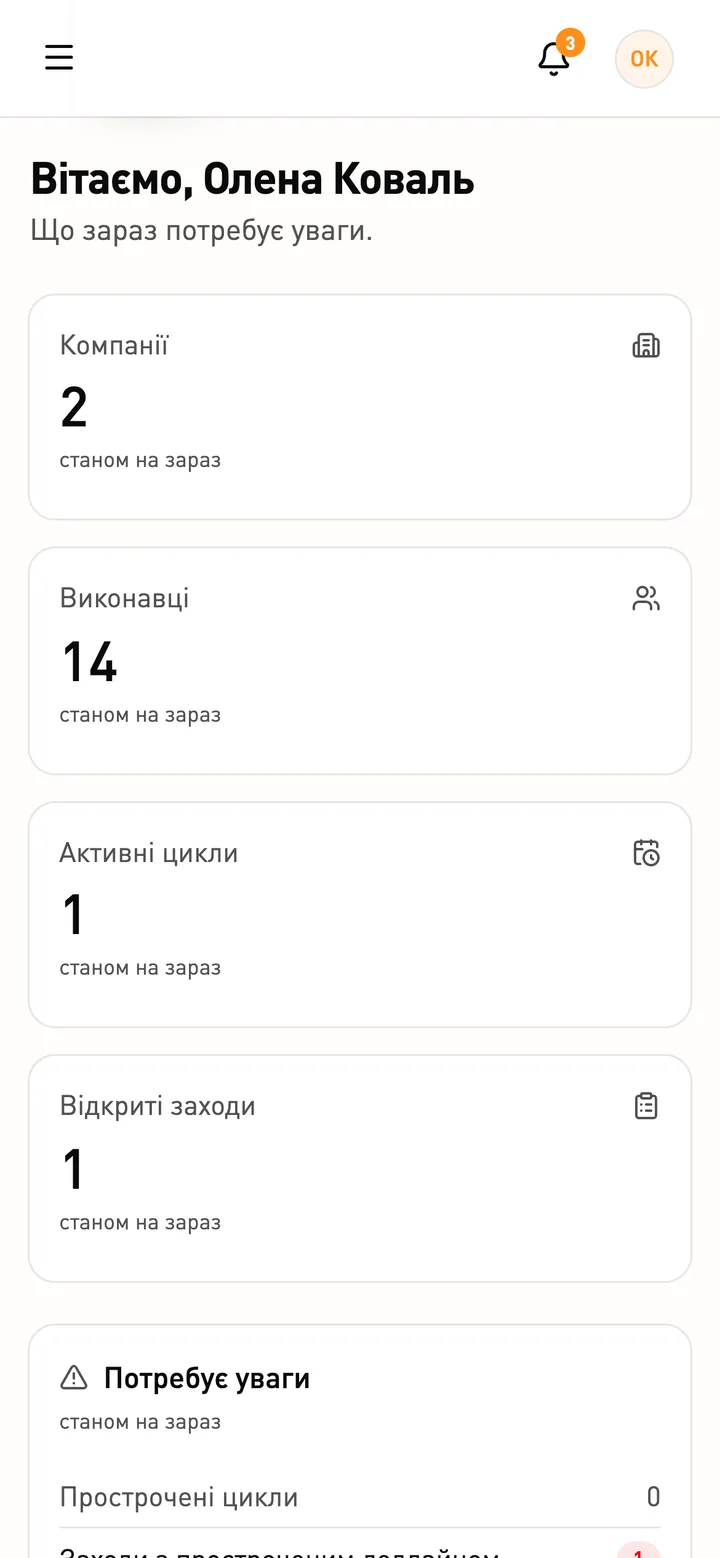
Workers lived in dozens of Excel files
The agency kept one file per client company and project. Not everyone was in its accounting system, some people were added by hand, and working conditions were surveyed with a Google Form. The same workers showed up in different files with conflicting details, and the feedback collected never led anywhere. The agency put it plainly in its brief: it didn't want a survey form that leads nowhere. It wanted a system that shows each client company that the agency is working on worker quality.
Diagram, file names are illustrative
The agency had a cheaper offer, but it ran in the cloud and did not separate client companies' data on the server. It chose a system on its own server instead: each client company's data is separated at the server level, the calculations are covered by tests, every action is logged, and backups run every day.
Each client company sees only its own people
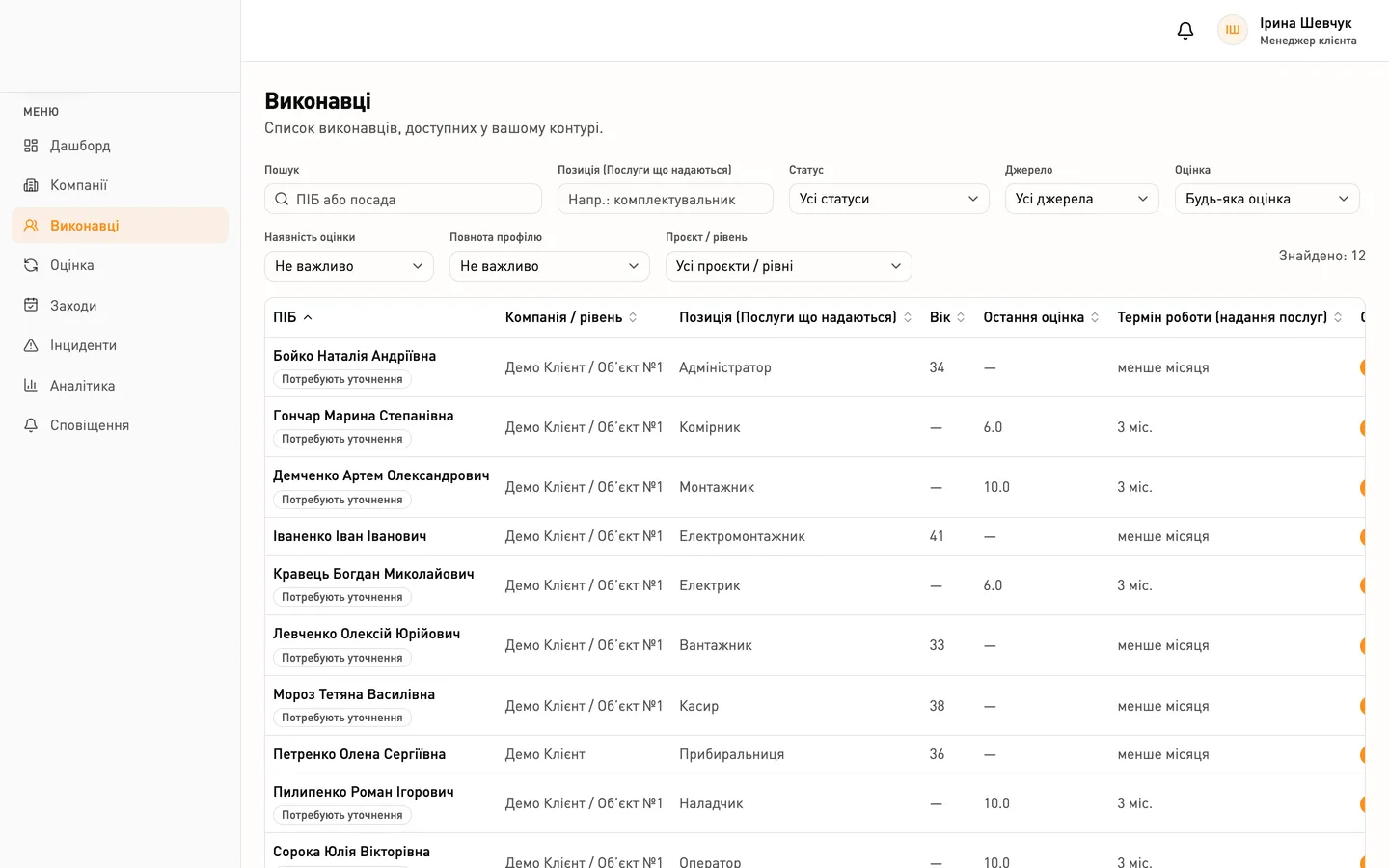
A client manager has a portal of their own: their company or one of its divisions, their people and their sites. They rate workers and track actions. Access is checked by the system on the server, not just in the interface, so another company's data will not open even from a direct link. Drag the line to compare how a coordinator and a client manager see the roster.
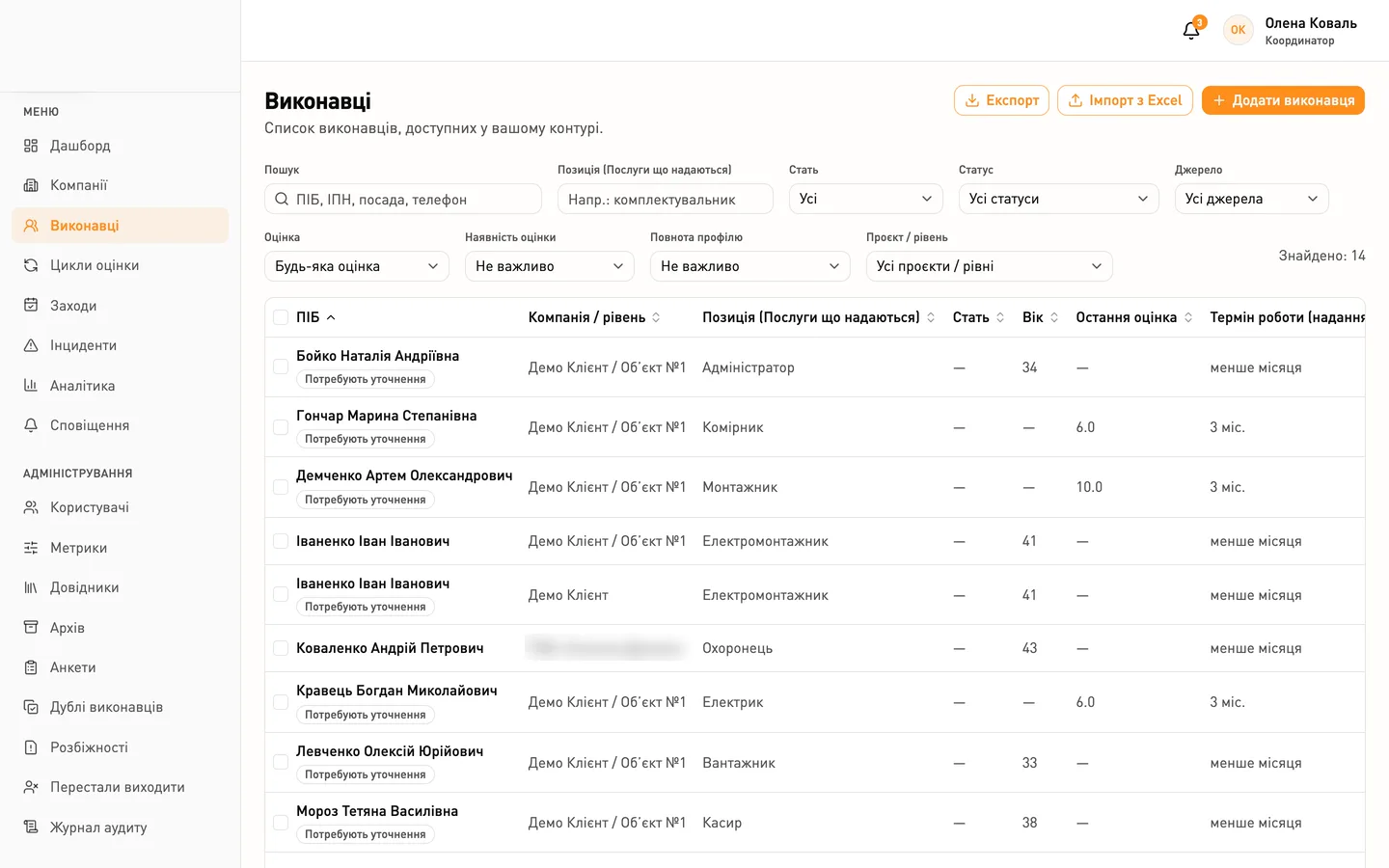
 Coordinator
Client manager
All screens on this page use demo data.
Workers don't need an account
People at the sites don't use corporate systems: no work email, no logins, and nobody will install a separate app. So the survey runs in a Telegram bot. A worker shares their phone number, gives consent to data processing and answers with buttons. The bot accepts only the person's own number, so nobody can answer for someone else.
- If the answer is "no", the bot asks for a reason and won't accept the answer without one
- Invitations and reminders arrive in the same chat
- Consent is stored with the version of its text: if the text changes, the bot asks again
- A survey in progress is not lost even if the server restarts
- Tapping a button twice won't create a second answer
The accounting system became the main source of data
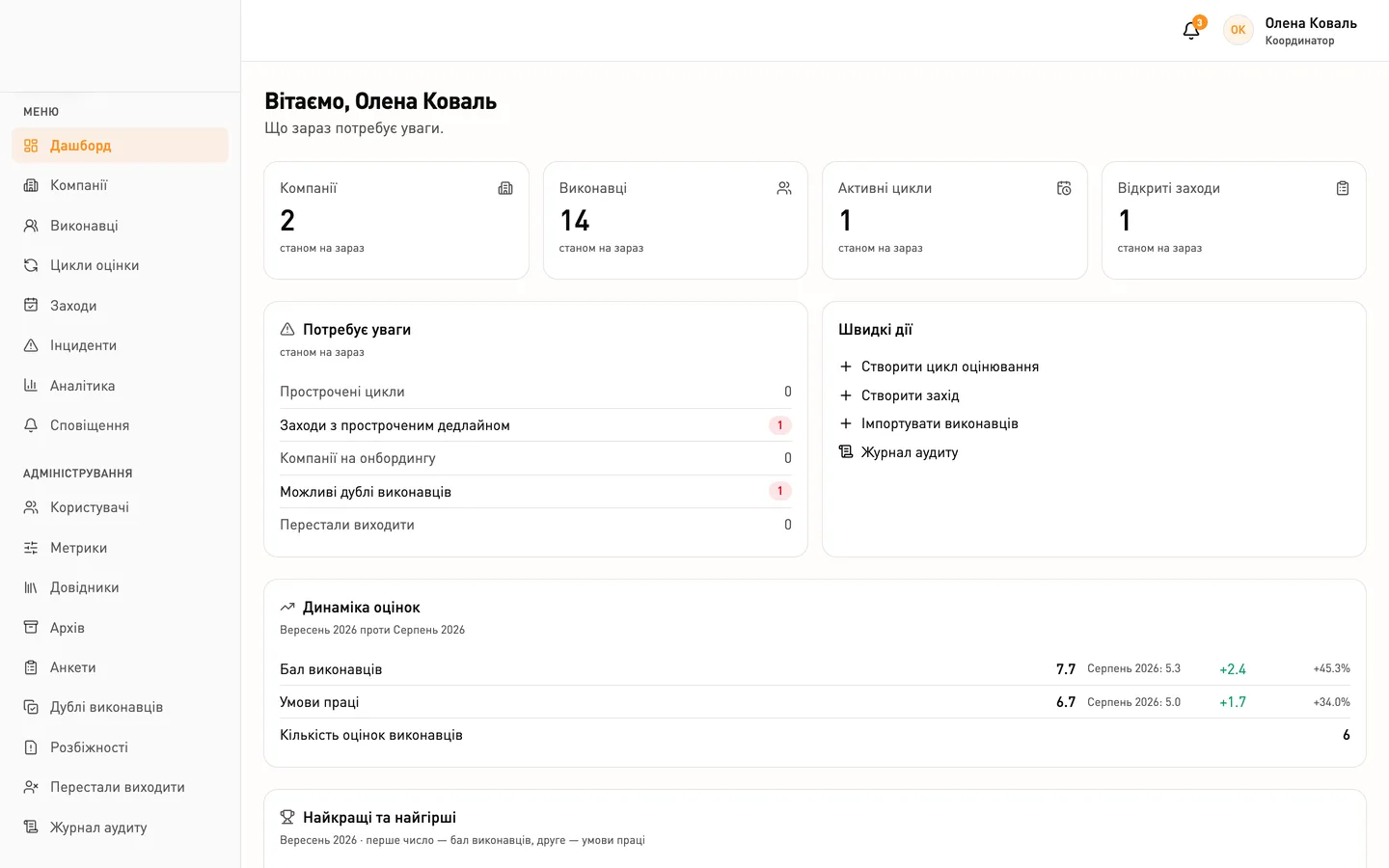
The roster updates itself from the agency's accounting system: timesheets, requests and corrections create companies, sites, workers and their assignments. When data is moved by hand, the database quickly goes stale, so nothing here is moved by hand.
One interface in three languages
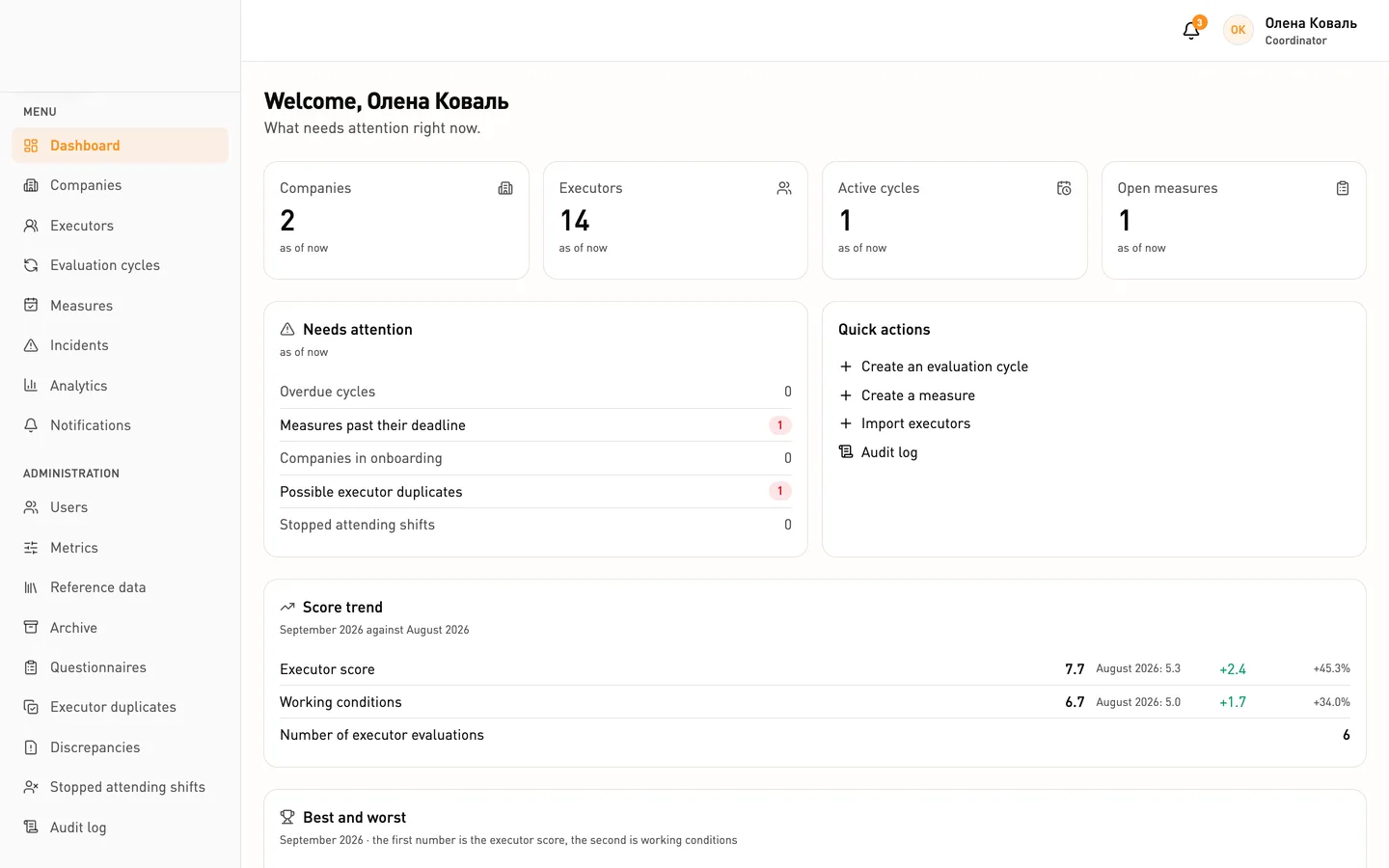
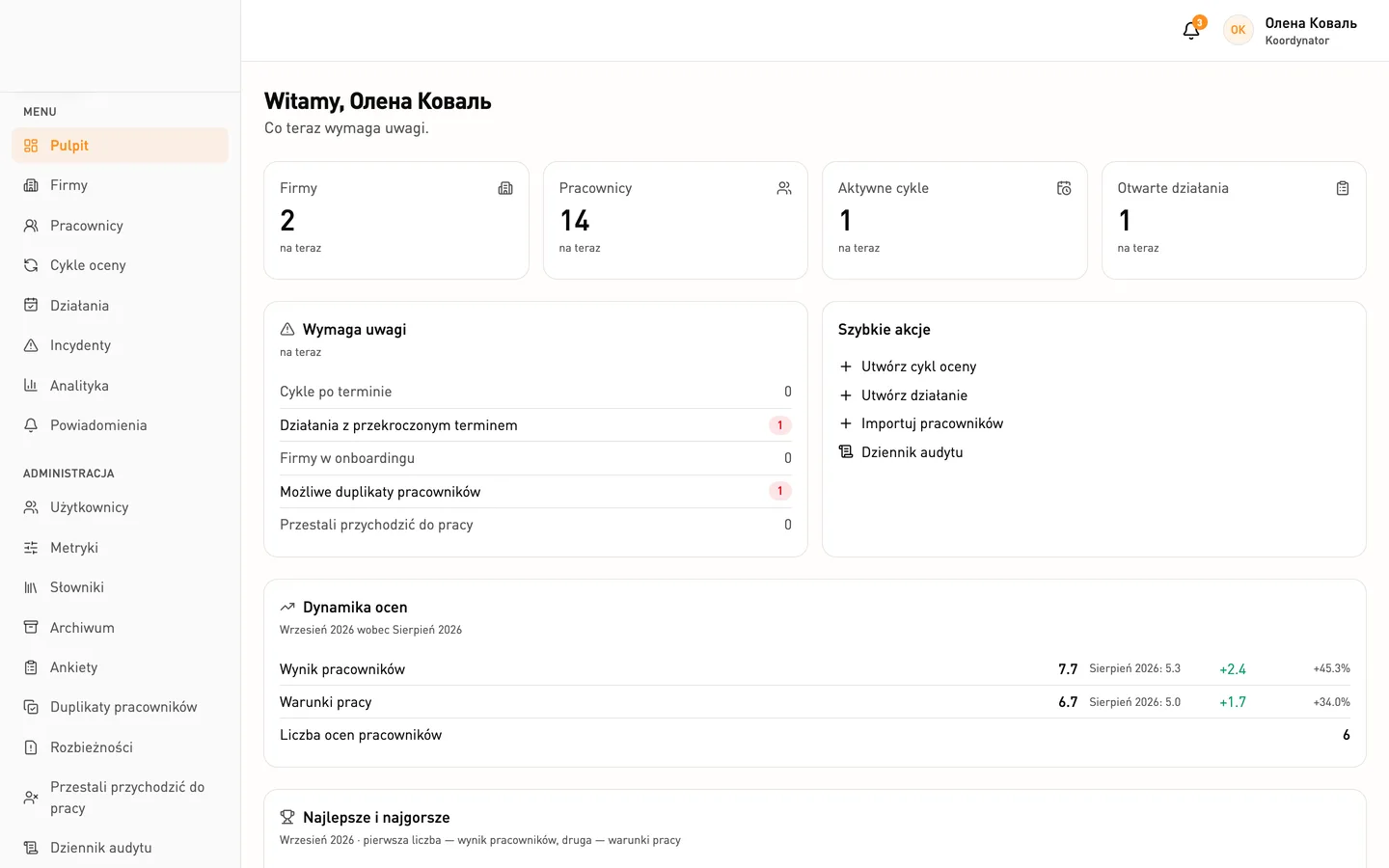
The portal works in Ukrainian, English and Polish. Every user picks their own language. The contract called for one extra language, and we delivered two. All text lives in translation files: a new language is added without rebuilding the system, and an update with a missing translation simply won't ship.
What went wrong and what we learned
The project didn't go in a straight line. Here are three places where the plan had to change, and what came of it.
-
What happenedAfter the first Excel import, the same people were linked to one company 4 times each. It affected more than a thousand people.What we didWe archived the Excel data and made the agency's accounting system the main source. Since then the roster updates itself.
-
What happenedThe agency had no final list of metrics, and it was time to launch the questionnaires.What we didWe started creating metrics right inside the questionnaire, with no separate reference list.
-
What happenedAnyone with a wrong phone number or date was dropped during import.What we didErrors like these no longer reject the person: the person still makes it into the roster.
What you can take away
- 01Decide which system is your source of truth before the first data import. If spreadsheets and the accounting system count equally, duplicates spread across the whole database.
- 02Don't make workers create an account. A survey in a messaging app, tied to a phone number, takes a minute, and nobody can answer for someone else.
- 03Enforce anonymity with a threshold instead of promising it. Client companies see working conditions results only when at least 5 people have answered.
First version in 3 weeks
A single developer on our team ran the project end to end: analysis, architecture, development, the server and updates. AI agents helped with writing and reviewing code and with testing the interface in a browser. There's no AI in the system itself: scores are calculated with set weights, thresholds and formulas.
- June 9Contract signed
- July 1First version live in production
- August 12Phase one closed
- September 9Phase two accepted: accounting system integration, bot, languages
- October 12Project handed over
- Thousands of requests per working day with no server errors
- Daily backups plus a separate database copy before every update, checked automatically
- Internet access to the server is kept to a minimum, and the control panel opens only over a secure connection
- Every action is written to a log that can't be changed, even directly in the database
- Archive instead of deletion: score history is never wiped